Magazine en ligne · N°031 · Vendredi 13 Mars 2026
🔴 Flash
Anosimanjaka-Ambohitrimanjaka — Des descendants de lointains princes japonais réfugiés à Madagascar ! Trafic d'animaux protégés : Les tortues de plus en plus menacées Anosimanjaka-Ambohitrimanjaka — Misy mponina tranainy taranak'andriana japoney nitsoaka nankaty Madagasikara ! Vidin-tsolika : Nahitana fidinany ny teto an-toerana, miakatra ny any ivelany Destination Madagascar : Des sites touristiques merveilleux, mais un défi majeur encore à relever Ankarabolava-Agnakatrika : Une forêt vierge en sursis dans le district de Vangaindrano Tsena sy fivelomana — Misy efa telopolo taona nivarotana voankazo ary anisany ny zavoká Anosimanjaka-Ambohitrimanjaka — Des descendants de lointains princes japonais réfugiés à Madagascar ! Trafic d'animaux protégés : Les tortues de plus en plus menacées Anosimanjaka-Ambohitrimanjaka — Misy mponina tranainy taranak'andriana japoney nitsoaka nankaty Madagasikara ! Vidin-tsolika : Nahitana fidinany ny teto an-toerana, miakatra ny any ivelany Destination Madagascar : Des sites touristiques merveilleux, mais un défi majeur encore à relever Ankarabolava-Agnakatrika : Une forêt vierge en sursis dans le district de Vangaindrano Tsena sy fivelomana — Misy efa telopolo taona nivarotana voankazo ary anisany ny zavoká

🎭 **6 Voamaintilany - Divers et divertissements**.

🏄♂️ *Prêt pour l'aventure et les activités sportives?
Plongez dans l'univers des hébergements charmants et des séjours inoubliables
Vivez des expériences uniques et des sensations fortes au cœur de paysages naturels d'une beauté rare.
📰 « Découvrez nos articles récents et Archives »
🏪 « Découvrez les Offres de nos Espaces »
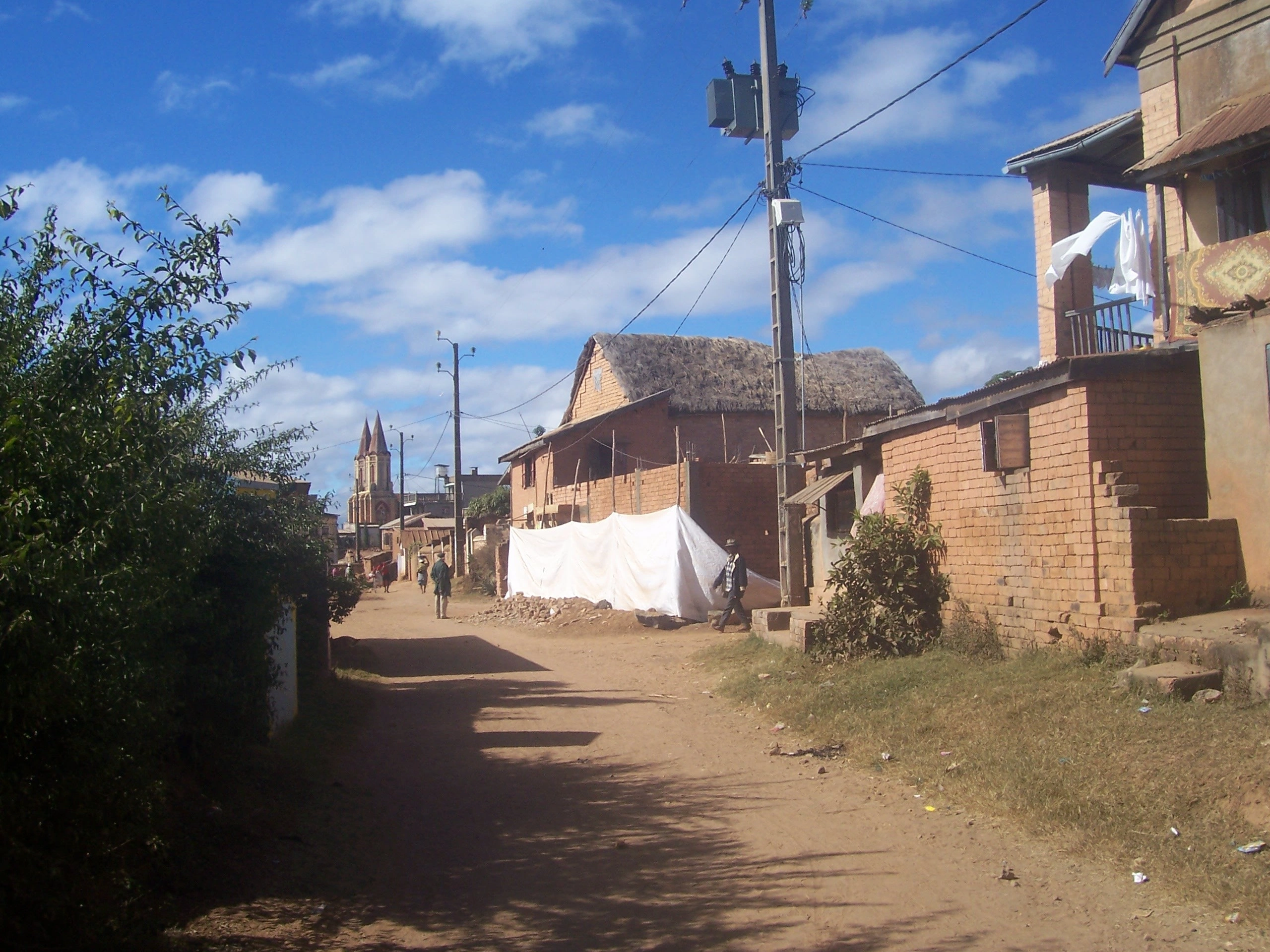
Anosimanjaka-Ambohitrimanjaka:
The legend of Japanese Princes hidden in Madagascar and their descendants

[While historians have not confirmed this narrative through written records, the story remains deeply rooted in local memory.]

It's a story of exile, ancestry, and identity in the Malagasy Highlands and in Madagascar.

Who are the Malagasy people, really? Are they descendants of Southeast Asian sailors, African migrants, Arab traders, or European adventurers? For decades, historians, linguists, and anthropologists have tried to unravel the mystery of Madagascar's population. Yet in the central highlands, a fascinating oral tradition suggests another possibility: that the inhabitants of two villages near Antananarivo may carry the bloodline of long-lost Japanese princes who once sought refuge on the island.

Question that still echoes

In the early 1970s, an exhibition held at the historic Andafiavaratra Palace asked a simple yet profound question: "Malagasy, who you are?" Organized during the celebrations of Madagascar's independence, the exhibition explored the diverse origins of the Malagasy people.

Madagascar has always been a crossroads of civilizations. Archaeological and linguistic research suggests that the first settlers arrived from Southeast Asia, particularly Indonesia, more than a millennium ago. Later migrations from East Africa, as well as influences from Arab merchants and European sailors, further shaped the island's population.

But beyond scientific studies lies a wealth of oral traditions. Among them is a remarkable story preserved in the villages of Anosimanjaka and Ambohitrimanjaka, located about fifteen kilometers west of Antananarivo.

According to local narratives, some inhabitants may descend from distant Japanese princes who fled wars in their homeland centuries ago and eventually settled in Madagascar.

Tafohasina: a refuge for nobles

The story begins with the ancient name of Ambohitrimanjaka: Tafohasina.

In Malagasy, tafo can mean shelter or protection, while hasina refers to sacred dignity or noble authority. Together, the name suggests a sanctuary for aristocrats — a place where people of high lineage could take refuge from danger.

This interpretation aligns with another symbolic expression linked to the village: "Efa-dray Efa-dreny," meaning "four fathers and four mothers." The phrase represents the union of four major lineages that formed the early community of Ambohitrimanjaka.

These lineages were not all native to the region. Many were descendants of nobles who fled political conflict elsewhere and sought protection in this refuge.

One of the earliest recorded cases dates back to the reign of Andrianjaka. His nephew, Andriambe, reportedly fled family hostility and settled in Ambohitrimanjaka. By marrying a local woman, he founded a lineage known as the Zanatompomasina, which became one of the ancestral branches of the community.

Another story tells of Andriamanjakatokana, son of Andriatsitakatrandriana, who also escaped persecution by his brothers and found refuge in the same village.

Over time, these noble fugitives and their descendants formed a complex network of clans that shaped the social identity of the region.

The enigmatic Tampanga

Among the four founding groups, one stands out for its mysterious origin: the Tampanga, also associated with the name Antairoka.

Local oral tradition claims that these people descended from defeated Japanese princes who fled their homeland as early as the eighth century. After a long and uncertain journey across the seas, they eventually arrived in Madagascar and settled in the central highlands around the sixteenth century, particularly in Anosimanjaka and Ambohitrimanjaka.

While historians have not confirmed this narrative through written records, the story remains deeply rooted in local memory.

Interestingly, some linguistic clues seem to echo this possibility.

Curious Linguistic Connection

The name "tapangan" in Taiwanese languages refers to a plant root. The word bears a striking phonetic resemblance to "tapanga," a term mentioned in the oral history of Anosimanjaka.

In Malagasy, ampanga refers to a type of fern that once grew abundantly in ponds and wetlands around the villages.

The similarity in pronunciation between these terms raises intriguing questions. Could the words share a distant linguistic connection? Or is it merely coincidence?

What we do know is that the Malagasy language itself is a mosaic of influences. Many words originate from Indonesian, Bantu, Swahili, and Arabic languages. Such linguistic diversity reflects the island's long history of migration and cultural exchange.

Wars that shaped the Japanese world

If the legend of Japanese exiles holds any truth, the historical context of Japan might provide clues.

Between the eighth and sixteenth centuries, Japan experienced long periods of political turmoil. Rival clans fought for control of territories and imperial authority, giving rise to the powerful samurai class.

Several major conflicts defined this era:

  • The Heian period, marked by battles against northern tribes and internal court rivalries.
  • The Genpei War (1180–1185), fought between the Taira and Minamoto clans.
  • The Nanbokuchō conflict (1336–1392), a struggle between rival imperial courts.
  • The chaotic Sengoku period, a century of near-constant warfare among feudal lords.

This long cycle of wars eventually ended when Tokugawa Ieyasu unified the country after the decisive Battle of Sekigahara.

During such turbulent times, defeated nobles and warriors often fled their lands. While most sought refuge within Japan, the possibility of distant migrations cannot be entirely ruled out.

Heritage of defiance

Whether myth or history, the legend seems to resonate with certain characteristics observed among the people of Anosimanjaka and Ambohitrimanjaka.

Local narratives describe them as fiercely independent and resistant to outside authority.

One famous episode concerns the powerful merina King Andrianampoinimerina. During a conflict with Anosimanjaka, the villagers reportedly wounded the king in the leg with a firearm. According to tradition, he carried the injury for the rest of his life.

Another example involves Prince Ramanetaka, who originated from Anosimanjaka. When Ranavalona I ascended the throne, Ramanetaka fled to the island of Mayotte. Today, some of his descendants still visit his tomb in Anosimanjaka.

The spirit of resistance continued into modern history. During the Malagasy Uprising of 29 March 1947, villagers from Anosimanjaka joined the struggle against French colonial rule. Oral accounts even claim that when authorities arrested several residents, the entire community volunteered to be imprisoned alongside them.

Guardians of Tradition

Today, Anosimanjaka remains a place where history and tradition are carefully preserved.

The region is known for the influential Zanadravalona family, which once ruled the area and owned extensive rice fields. Even prominent political figures of the Malagasy monarchy, including Prime Minister Rainivoninahitriniony, possessed land in the region.

But beyond historical figures, the everyday life of the villagers continues to reflect their heritage.

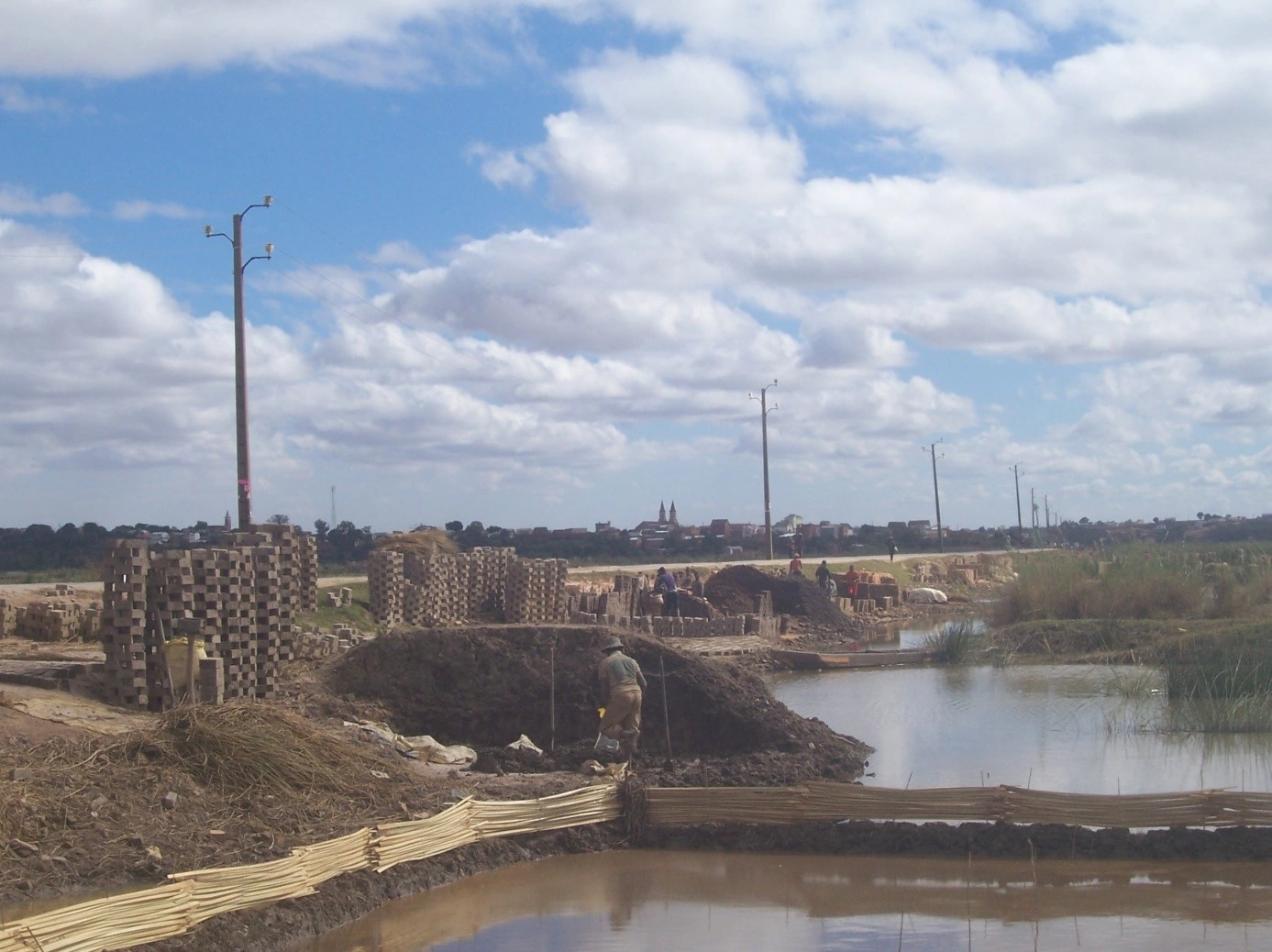
Agriculture remains the main livelihood. Rice cultivation dominates the landscape, while brick-making becomes an important source of income during the dry season.

📅 13 Mars 2026
Mpanao Biriky - Anosimanjaka Ambohitrimanjaka

Cultural celebrations also play a central role in community life. One of the most important events is the annual Alahamadibe festival, which will be celebrated on March 19th of this year. This traditional ceremony commemorates royal ancestors and reinforces the connection between past and present.

A mosaic identity

The story of Japanese princes hidden in Madagascar may never be fully proven. Yet its significance lies not only in historical accuracy but in what it reveals about Malagasy identity.

Madagascar's population is the result of centuries of migration, encounter, and blending. Asian navigators, African settlers, Arab traders, and European adventurers all contributed to the formation of the Malagasy people.

Some families even claim Jewish ancestry, while others trace their roots to pirates who once sailed the Indian Ocean.

In this sense, Madagascar represents one of the world's most remarkable cultural mosaics.

The answer to an ancient question

So, where do the Malagasy truly come from?

Perhaps the answer is not a single origin but a tapestry of journeys. From Southeast Asia to East Africa, from the Arabian Peninsula to distant Europe — and perhaps even from feudal Japan — countless stories have converged on this island.

The legend of Anosimanjaka and Ambohitrimanjaka reminds us that history is not only written in books but also carried in memory, language, and tradition.

And sometimes, within a quiet village only a few kilometers from Antananarivo, echoes of distant worlds may still survive.

Ami Ral

Économie
Histoire & Culture
Anosimanjaka Ambohitrimanjaka
Histoire · Origines

Anosimanjaka-Ambohitrimanjaka : Des descendants de lointains princes japonais réfugiés à Madagascar !

« Malgache, qui es-tu ? » Tel était le titre de l'exposition présentée au Palais d'Andafiavaratra entre 1973-1974, organisée par le gouvernement malgache, dans le cadre de la célébration de la fête de l'Indépendance. Concernant particulièrement Anosimanjaka et Ambohitrimanjaka, il y aurait parmi la population des descendants de lointains princes japonais réfugiés à Madagascar !

📅 13 Mars 2026 Lire la suite
Culture malgache
Histoire · Lovantsofina

Anosimanjaka-Ambohitrimanjaka : Misy mponina tranainy taranak'andriana japoney nitsoaka nankaty Madagasikara !

"Malagasy, iza moa ianao?" Io no lohatenin'ilay Fampirantiana natao tao amin'ny Lapan'Andafiavaratra, izay nokarakarain'ny Fanjakana malagasy, ary tafiditra tao anatin'ny fankalazana ny fetin'ny fahaleovantena (1973-1974).

Anosimanjaka dia tanàna miala eo amin'ny 15 kilaometatra andrefan'Antananarivo renivohitr'i Madagasikara, ary ao anatin'ny kaominin'Ambohitrimanjaka, distrikan'Ambohidratrimo.

📅 13 Mars 2026 Araho ny tohiny
Environnement
Forêt & Biodiversité

Ankarabolava-Agnakatrika : Une forêt vierge en sursis dans le district de Vangaindrano

[La préservation d'Ankarabolava-Agnakatrika dépasse le cadre local.] Dans le district de Vangaindrano, au sud-est de Madagascar, se trouve Ankarabolava-Agnakatrika, une zone forestière encore largement méconnue du grand public. Cette forêt constitue une Nouvelle Aire Protégée (NAP) couvrant environ 772 hectares, gérée en collaboration avec le Missouri Botanical Garden.

📅 13 Mars 2026 Lire la suite
✨ Promo Voyage Madagascar — Découvrez nos offres !

🏝️ Séjour — Réservez maintenant !

🍯 Produits artisanaux — 100% Made in Madagascar

📸 Votre publicité ici — Contactez-nous

🎶 Festival Culturel — Ne manquez pas l'événement !

⚽ Sponsoring Football — Votre marque en avant !

Publicité Voandalana

Commentaires